
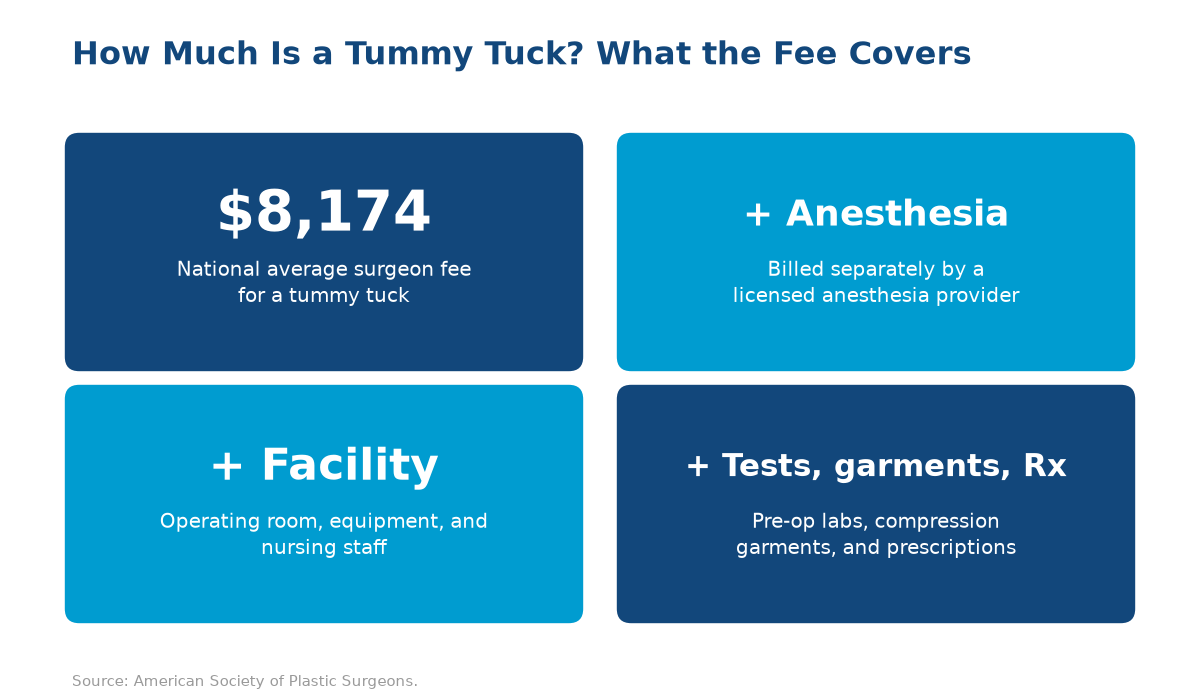
A tummy tuck, known clinically as abdominoplasty, is a surgical procedure that removes excess skin and fat from the abdomen and tightens the underlying muscles to flatten and reshape the midsection. So how much is a tummy tuck? The national average cost for the surgeon fee is $8,174, according to the latest statistics from the American Society of Plastic Surgeons, and that figure covers the surgeon’s fee only. Anesthesia, facility costs, and other related expenses are not included, so your total investment will be significantly higher. Because a tummy tuck is a cosmetic procedure, Minnesota health plans do not cover it, and your final fee is quoted at a personal consultation.
Understanding the full cost picture, whether you are a candidate, and what recovery looks like can help you move forward with confidence. The sections below address each of those questions directly, using verified data and plain language so you can have an informed conversation with your surgeon.
What Does a Tummy Tuck Actually Cost?
The ASPS national average surgeon fee for a tummy tuck is $8,174. The American Society of Plastic Surgeons is clear that this figure represents the surgeon’s fee alone and is not the total price of the procedure.
Why the surgeon fee is not the total price
Several additional cost components make up the complete investment. When budgeting for a tummy tuck, expect to account for:
- Anesthesia fees: Administered by a licensed anesthesia provider and billed separately from the surgeon.
- Hospital or surgical facility costs: The operating room, equipment, and nursing staff carry their own fees.
- Medical tests: Pre-operative lab work or imaging required before surgery.
- Post-surgery garments: Compression garments worn during recovery to support healing, which may be part of the facility fee.
- Prescriptions for medication: Pain management and antibiotics prescribed after the procedure.
The surgeon’s fee itself can vary based on the surgeon’s experience, the specific technique used, and geographic location. A surgeon practicing in a metropolitan area may charge differently than one in a regional market like Duluth.
Insurance coverage for a tummy tuck
Health insurance plans do not cover a tummy tuck because it is classified as a cosmetic procedure. If you have significant skin redundancy that causes rashes, infections, or functional problems, a related reconstructive procedure called a panniculectomy may meet your insurer’s medical-necessity criteria. Our team can help you understand the distinction at your consultation. Please understand that a panniculectomy is not a tummy tuck; it only addresses the large apron of skin that hangs below the pubic bone for people who’ve had massive weight loss. It is not a body contouring procedure, does not address skin above the pubic bone (excess skin on the upper abdomen) and does not tighten loosened muscles.
Financing your procedure
Cosmetic surgery at Northland Plastic Surgery must be paid at least one week before the procedure date. If you need help planning for that expense, our payment options and financing partners include Prosper Healthcare Lending and CareCredit, both of which offer patient financing programs. Your personalized fee is quoted as part of consultation, never before.
Who Is a Good Candidate for a Tummy Tuck?
A tummy tuck delivers the best results for patients whose concerns go beyond what diet and exercise can address. The ASPS tummy tuck overview identifies several characteristics that make someone a strong candidate. In general, you may be a good candidate if you:
- Have maintained a stable weight for several months before surgery.
- Have excess or loose abdominal skin that has not responded to diet and exercise.
- Have separated abdominal muscles, known as diastasis recti, after pregnancy or significant weight change.
- Are in good overall health without uncontrolled chronic conditions.
- Do not smoke, or are willing to stop smoking for at least six weeks before and after surgery as directed by your surgeon.
- Have completed your family, since future pregnancies can stretch the abdominal wall and alter the surgical result.
- Hold realistic expectations about outcomes.
If you are close to your goal weight but have stubborn loose skin or muscle separation, a tummy tuck may be the right next step. The only way to know for certain is a consultation with your surgeon, who will evaluate your anatomy, health history, and goals before recommending a plan.
What Is the Difference Between a Tummy Tuck and Liposuction?
Patients sometimes wonder whether they need a tummy tuck, liposuction, or a combination of both. The two procedures address different concerns, and understanding the distinction helps you arrive at your consultation with better questions.
Liposuction
Liposuction targets and removes isolated pockets of fat through a small tube called a cannula. It works best when skin elasticity is good, because the skin needs to retract smoothly after the fat is removed. Liposuction does not remove excess skin and does not repair separated muscles. You can learn more about liposuction at our Duluth practice to see whether it fits your goals.
Tummy tuck
A tummy tuck removes loose skin, tightens the abdominal wall muscles, and repositions the navel when needed. It is better suited to patients who have loose or hanging skin, muscle separation, or significant skin redundancy after pregnancy or major weight loss. The procedure addresses structural changes that liposuction alone cannot correct.
Can the two be combined?
Some patients benefit from both procedures performed together. Your surgeon determines the right approach based on your anatomy and goals at consultation. The ASPS liposuction overview offers additional context on what liposuction can and cannot accomplish, which may help you think through the comparison before your appointment.
How Long Does Tummy Tuck Recovery Take?
Recovery from a tummy tuck follows a predictable progression, though the exact timeline varies from patient to patient. Following your post-operative instructions closely protects your result and supports safe healing throughout every stage.
- Week 1 to 2: Rest at home with limited mobility. You will manage any surgical drains as directed and keep the incision area clean and protected.
- Week 2 to 3: Many patients return to desk work and light daily tasks. Pain and swelling decrease noticeably during this period.
- Week 6 to 8: Clearance for exercise and heavier physical activity depends on your surgeon’s guidance. Do not return to the gym before receiving explicit approval.
- Month 3 to 6: Most residual swelling resolves during this window. Scars continue to soften and mature over time, gradually fading from pink to a lighter tone.
Your surgeon will give you a personalized recovery plan at your pre-operative appointment. That plan covers activity restrictions, garment wear, wound care, and follow-up visit timing so you know exactly what to expect at every stage.
Schedule a Consultation at Northland Plastic Surgery in Duluth
Northland Plastic Surgery has served Duluth and the Arrowhead Region of northeastern Minnesota since 1992. Our experienced surgeons at Arrowpointe Medical Center building offer the tummy tuck procedure at Northland Plastic Surgery along with a range of related body contouring options tailored to your anatomy and goals. Patients travel to our Duluth clinic from communities throughout the region, including Superior, Cloquet, Two Harbors, the north shore, northwestern Wisconsin, and the Iron Range.
Cosmetic consultations are paid when care is delivered. Call (218) 724-7363 to schedule your consultation and get your personalized fee, candidacy assessment, and recovery plan from a surgeon who will take the time to understand what you are hoping to achieve.