Is liposuction a weight loss procedure? No, liposuction is not a weight loss procedure. It’s a body contouring surgery that removes localized pockets of fat, typically one to ten pounds, from targeted areas like the abdomen, flanks, thighs, and arms. It’s designed for patients who are already near their goal weight and want to reshape stubborn areas that diet and exercise haven’t been able to address.
If you’ve ever wondered whether liposuction could help you drop a clothing size or finally hit a weight goal, you’re not alone. It’s one of the most common questions our surgical team in Duluth hears during consultations, and the answer is more nuanced than a simple yes or no. Liposuction is one of the most effective procedures in cosmetic surgery, but only when it’s used for the right reason. Here’s a clear, honest look at what it can do, what it can’t, and how it fits into the bigger picture of body contouring.
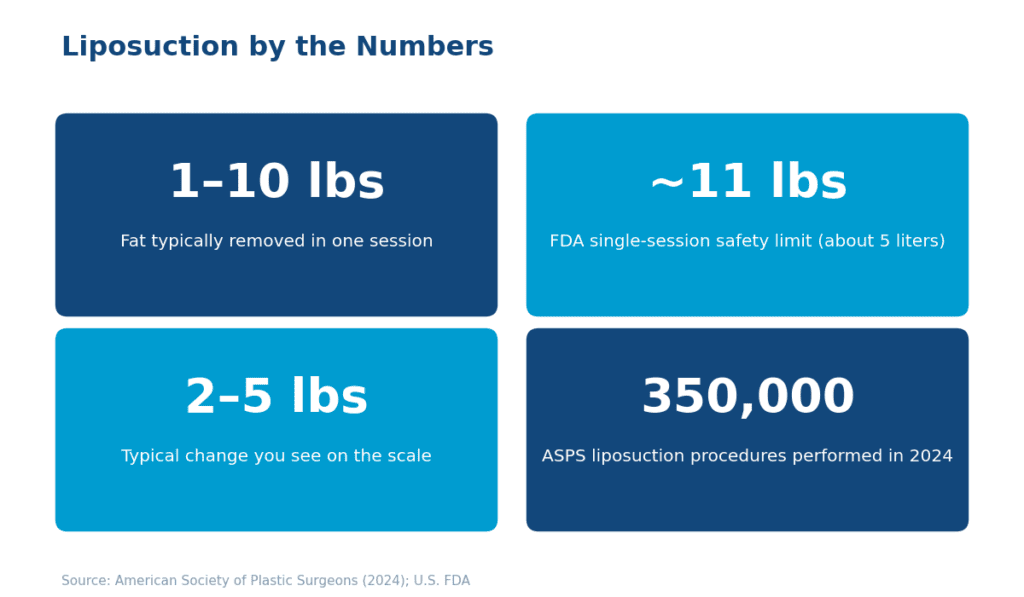
According to the American Society of Plastic Surgeons, liposuction was the most performed cosmetic surgery in the United States in 2024, with nearly 350,000 procedures completed by ASPS member surgeons. Its popularity is well earned. But that volume also means there’s plenty of misinformation circulating about what the procedure can actually accomplish.
How Liposuction Actually Works
Liposuction is a surgical body contouring procedure that removes fat through small incisions. Your surgeon inserts a thin, hollow tube called a cannula and uses gentle suction to loosen and remove fat cells from the targeted area, sculpting a smoother, more proportionate contour.
Several techniques are common today. Tumescent liposuction uses a fluid solution injected into the treatment area before fat removal, and it remains the gold standard for safety and precision. Laser-assisted liposuction uses energy to liquefy fat before removal and can provide some skin tightening as a secondary benefit. Ultrasound-assisted liposuction is especially useful in dense, fibrous areas like the back or male chest.
Regardless of technique, the principle is the same: liposuction reshapes the body. It is not a weight-reduction strategy.
How Much Weight Liposuction Removes
Liposuction typically removes between one and ten pounds of fat in a single session. The FDA has approved liposuction to remove up to roughly 11 pounds, or about five liters, of fat at one time, primarily for safety reasons. Removing more than that in a single procedure increases the risk of complications and is not standard practice for cosmetic body contouring.
In practice, the results show up in the mirror, not on the scale. Most patients lose only a few pounds in measurable weight but see dramatic improvements in how clothes fit and how their body looks in profile. If you’ve been hoping liposuction would drop several clothing sizes in a single surgery, this is the most important expectation to reset early.
Who Makes a Good Candidate for Liposuction?
The ideal liposuction candidate is at or near a stable, healthy weight and has localized fat deposits that have resisted diet and exercise. Common examples include lower-abdomen pooch, love handles, inner or outer thigh bulges, and stubborn fat under the chin or along the bra line.
Good candidates also tend to have firm, elastic skin. When fat is removed, the skin needs to contract and conform to the new shape underneath. Patients with significant skin laxity often need a combined approach, such as liposuction paired with a tummy tuck, to achieve the best result. Your overall health matters too. Non-smokers in good general health heal more predictably and have lower surgical risk.
Realistic expectations are just as important as physical readiness. Liposuction can produce beautiful, natural-looking results, but it isn’t a shortcut around healthy living, and it isn’t a treatment for obesity.
What Liposuction Can Do
Targeted, Permanent Fat Removal
Liposuction removes fat cells permanently from the treated area. Once those cells are gone, they don’t grow back. That means the contour you create is durable. As long as you maintain a stable weight, your results can last for years.
Sculpting Areas That Won’t Respond to Diet and Exercise
Some fat pockets are genetically stubborn. No amount of cardio or clean eating moves them. Liposuction is purpose-built for these areas: love handles, lower abdomen, inner thighs, upper arms, and under the chin or along the jawline are the most common treatment zones.
Improving How Clothing Fits
Many patients tell us the most meaningful result isn’t a number on the scale, it’s the way their favorite jeans, dresses, or workout clothes finally fit the way they’re supposed to. Smoothing a single stubborn bulge can transform how confident you feel in everyday clothing.
What Liposuction Can’t Do (and Why)
It Won’t Replace Significant Weight Loss
If your goal is to lose 30, 50, or 100 pounds, liposuction is the wrong tool. The procedure isn’t designed for high-volume fat reduction, and the FDA-approved limit reflects the safety reasons behind that. Patients pursuing significant weight loss are usually better served by medical weight management, lifestyle changes, or, in some cases, bariatric surgery.
It Won’t Tighten Loose Skin
Liposuction removes fat. It does not tighten skin. Patients who have lost significant weight or who have skin laxity from pregnancy or aging often need a combined procedure, such as a tummy tuck, body lift, or arm lift, to address loose skin alongside fat removal. Trying to use liposuction alone in those situations usually produces a disappointing result.
It Won’t Resolve Cellulite
Cellulite is caused by the structural relationship between fat, connective tissue, and skin, not just excess fat. Liposuction doesn’t change that structure, and in some cases it can make the dimpling appear slightly more visible. If smoother skin is your goal, different treatments are better suited to the problem.
It Won’t Maintain Itself
The fat cells removed during liposuction are gone for good, but the fat cells that remain in your body can still grow if you gain weight. Long-term results depend on continuing the healthy habits that brought you close to your goal weight in the first place.
Liposuction vs. Bariatric Surgery vs. GLP-1 Weight-Loss Medications
Now that medications like semaglutide and tirzepatide have become widely available, more patients are asking how liposuction fits into the broader weight-management picture. These options serve very different purposes.
GLP-1 medications and bariatric surgery are weight-loss tools. They reduce overall body fat by changing appetite, metabolism, or nutrient absorption. Patients who use them often lose substantial weight over months. Liposuction is a contouring tool. It removes fat from specific places after weight has stabilized. Many of our patients combine the two approaches: they use medication or bariatric surgery to reach a healthy weight, then turn to liposuction (often with skin-tightening procedures) to refine areas that didn’t respond to weight loss alone.
If you’ve reached your goal weight on a GLP-1 medication and you’re frustrated by stubborn pockets that linger, a consultation can help you understand whether liposuction or a combined body-contouring approach is the right next step.
Combining Liposuction with Other Procedures
Part of what makes liposuction so versatile is how often it’s combined with other body contouring surgeries. It’s a routine companion to a tummy tuck, where it smooths the flanks and lower back to create a seamless transition around the midsection. It’s also a core component of most mommy makeovers, where it refines areas like the hips and outer thighs that rarely respond to post-pregnancy fitness routines.
For patients who have already had significant weight loss, through lifestyle, medication, or bariatric surgery, liposuction is frequently paired with body lift procedures to address fat and loose skin in one surgical plan. According to ASPS 2024 statistics, arm lifts and thigh lifts rose two to three percent in 2024 as more patients pursued comprehensive body contouring after weight loss.
Talk to a Northland Body Contouring Surgeon About Liposuction
Now that you know what liposuction is, and what it isn’t, you’re in a much better position to decide whether it fits your goals. The most successful patients are those who approach the procedure for the right reasons: refining their shape, smoothing stubborn areas, and feeling more confident in their clothes.
At Northland Plastic Surgery in Duluth, our experienced surgeons take time to listen, evaluate your anatomy, and build a contouring plan tailored to your body and your life. Schedule a consultation to see whether liposuction, alone or combined with another procedure, is the right next step for you.